Maundy Thursday
By Dean Collins
Depending on the denomination or church tradition you grew up in, you may or may not have celebrated or even heard the term “Maundy Thursday.” The word ‘maundy’ comes from a Latin word, mandatum, where we get our word, ‘mandate.’ A mandate is another word for command or commandment. So “commandment Thursday” is another way to look at Thursday of Holy Week.
On Thursday of Holy Week, there are many things that happen. Every gospel writer includes several passages of the events on this day. Some of these passages are hard to read as we picture both the deep connection Jesus had with his disciples but also the devastating events that unfolded in the late evening of Thursday and into the early hours of Friday.
In John’s gospel there are five lengthy chapters (13-17) filled with many passages we treasure and quote often. Chapter 13 is the chapter where the origin of Maundy Thursday likely gets its name. There are two very specific things Jesus said that call for specific actions or obedience. Christians through the centuries generally do not practice one of these actions and the other we try and try and yet struggle to fully obey. Not because we don’t understand but because the journey of sanctification means we can make progress in this life but never get to full maturity of our faith until our heart and mind is fully transformed and complete when we meet Jesus.
As you read the familiar passage where Jesus washed the disciples’ feet, the passage ends with these instructions:
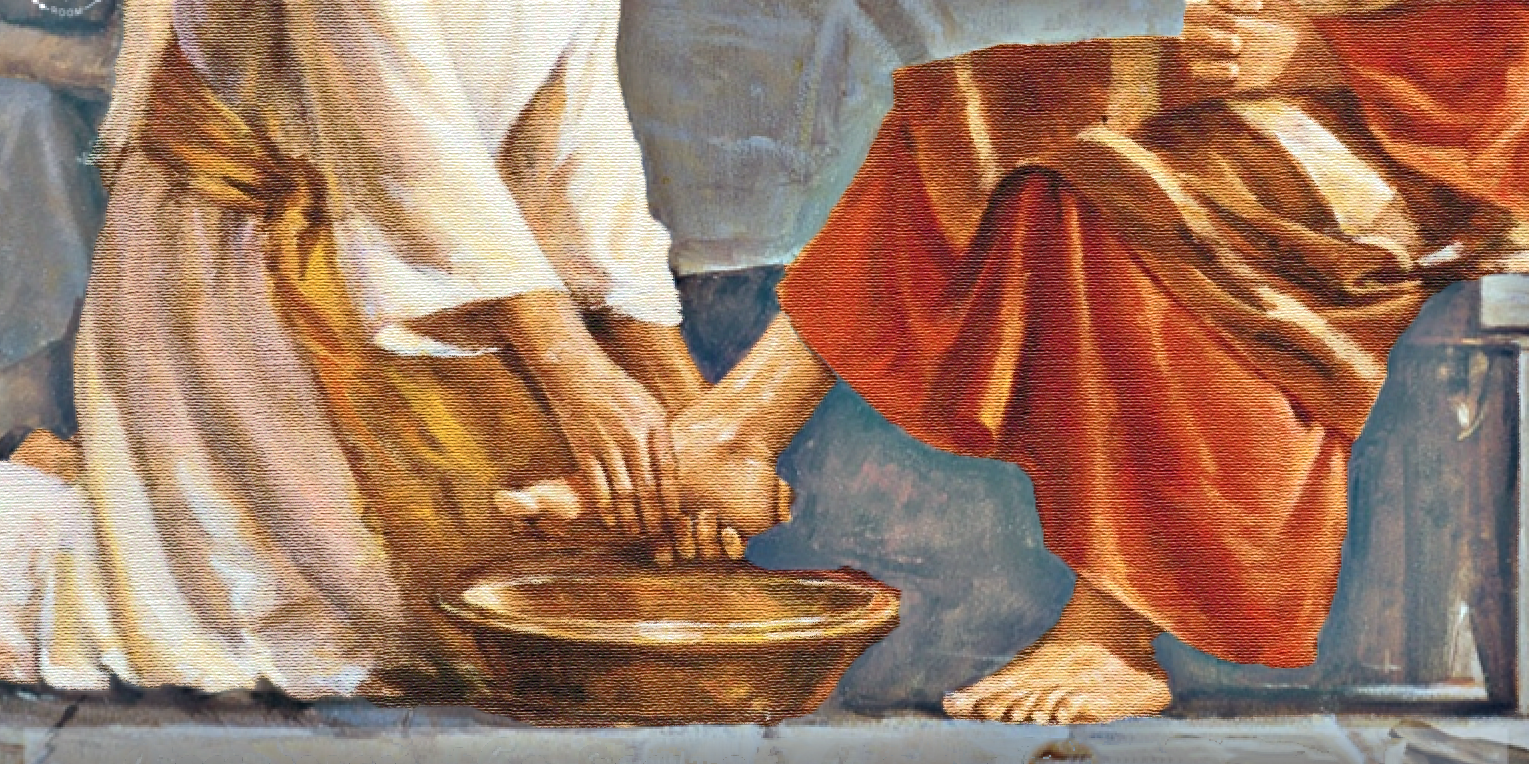
“…he said to them, “Do you understand what I have done to you? You call me Teacher and Lord, and you are right, for so I am. If I then, your Lord and Teacher, have washed your feet, you also ought to wash one another’s feet. For I have given you an example, that you also should do just as I have done to you. Truly, truly, I say to you, a servant is not greater than his master, nor is a messenger greater than the one who sent him. If you know these things, blessed are you if you do them.”
We might argue that Jesus didn’t really mean that washing each other’s feet was meant to be a regular practice, but it would be difficult to deny that humble service is to be practiced always. Some faith traditions do practice the humble service of washing each other’s feet on Maundy Thursday and at other special services. If you have never done this, it is humbling on both sides of this practice.
The other verse that is a clear commandment from Jesus is found in verse 34 and the implications of obedience are described in verse 35:
“A new commandment I give to you, that you love one another: just as I have loved you, you also are to love one another. By this all people will know that you are my disciples, if you have love for one another.”
This is the commandment that we must practice daily. And our difficulty comes when we realize the standard: “As I have loved you, you also are to love one another.” Reading all of the passages associated with Holy Thursday and what happens on Good Friday are a high bar. And yet it is what Jesus calls for when he tells us to love one another.
Take time to read and reflect not only on what Jesus suffered for us on this day but also on our willingness to even share in his suffering as we obey the commandment that he gave us on Holy Thursday.
Father, at times it is hard to read all that you suffered on this day before the crucifixion. Thank you for what you did for us that night and on Good Friday. Forgive us for the ways and times we have failed to love each other as you have commanded. Help us to see that when we love the way you love, the world will finally know that you are the Savior and Lord of all. In Jesus’ name, amen.
Your Time with God’s Word
John 13:1-38; Matthew 26:26-75 ESV
To receive daily posts delivered directly to your inbox, complete the form at the bottom of our home page.